
Australia is a strategic destination for many Vietnamese exporters. The demand for high-quality, reliable, and competitively priced goods continues to rise each year. Many businesses in Vietnam now view Australia as a stable and profitable export market. The growth is supported by strong trade agreements, improved logistics, and rising consumer trust in Vietnamese products.
This article will help businesses understand the key products, new market trends, and major opportunities for Vietnam exports to Australia in 2025.
1. Overview of Vietnam Exports to Australia
Vietnam and Australia maintain a strong trade relationship. Export volume from Vietnam has grown steadily. The growth is driven by high-quality goods, stable prices, and better supply chains. Many industries in Vietnam now serve the Australian market directly.
The market also benefits from free trade agreements. These agreements reduce tariffs and create smoother trade flows. Businesses can enter the market with less risk and more predictable costs.
1.1 Trade Growth in Recent Years
Vietnamese exports to Australia have increased sharply in the last decade. Consumer demand is rising, especially for food, electronics, and household products. Australia values safety and reliability, which Vietnamese goods provide.
The shift in global supply chains also supports this growth. Australia seeks diverse suppliers, and Vietnam fits this need well.
1.2 Why Australian Buyers Choose Vietnam
Australian importers trust Vietnam for several clear reasons.
-
Stable product quality
-
Competitive pricing
-
Strong compliance with safety rules
-
Growing production capacity
These factors create long-term partnerships between the two countries.
2. Key Products Exported from Vietnam to Australia
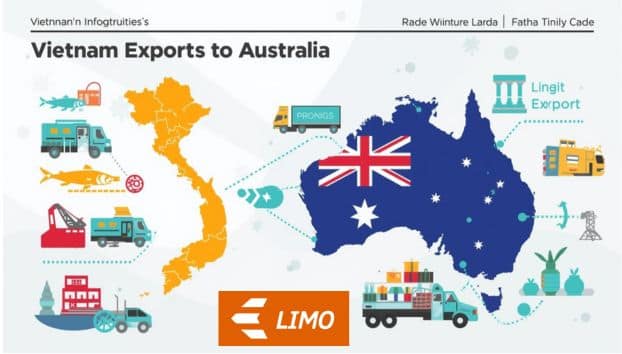
Vietnam supplies a wide range of products to Australia. Many categories show strong growth and stable demand.
2.1 Agricultural and Food Products
Agricultural goods remain a leading export category. Vietnamese fruits gain strong traction thanks to good flavor and strict safety standards.
Key items include:
-
Mango
-
Lychee
-
Dragon fruit
-
Coffee
-
Cashew nuts
Australia imports these goods in large volumes. Demand for tropical fruits continues to rise as Australian consumers seek fresh and exotic products.
Processed foods also perform well. Noodles, snacks, and packaged foods appeal to Australia’s multicultural population.
2.2 Seafood Products
Seafood is another major export sector. Vietnamese shrimp and pangasius fish are widely accepted. The products meet high standards and deliver stable supply.
Seafood demand increases each year due to health-conscious consumers. Vietnam benefits from advanced processing technology and good quality control.
2.3 Furniture and Wood Products
Furniture from Vietnam has a strong reputation in Australia. The designs are modern and durable. Prices also remain competitive.
Popular categories include:
-
Indoor furniture
-
Outdoor furniture
-
Wooden home décor
Many Australian retailers now source directly from Vietnam.
2.4 Electronics and Household Items
Electronics and household products also show solid growth. Vietnam has become a manufacturing hub for many global brands.
Common items include:
-
Home appliances
-
Mobile accessories
-
LED lighting
-
Small electronics
Stable quality and strong supply chains support this growth trend.
3. Market Trends for Vietnam Exports to Australia in 2025
3.1 Rising Demand for Sustainable Products
Australian consumers care deeply about sustainability. Products with eco-friendly packaging or sustainable sourcing gain strong attention.
Vietnamese exporters should prepare certifications, clear labeling, and green packaging to meet this trend.
3.2 Growth of E-commerce and Direct-to-Consumer Channels
More Australians buy imported goods online. Platforms like Amazon Australia and Catch.com.au are expanding fast.
Businesses can now reach buyers directly with lower marketing costs. Exporters should invest in digital branding and online product listings.
3.3 Higher Standards for Quality and Compliance
Australia maintains strict rules on safety and labeling. These rules continue to tighten.
Vietnamese companies must ensure full compliance to avoid delays or rejection. Testing reports and certificates are essential for smooth shipments.
3.4 Supply Chain Diversification
Australian buyers continue to diversify suppliers. Many want to reduce reliance on a single country.
Vietnam fits this strategy due to stable production and competitive pricing. This trend creates steady growth for exporters.
4. Major Opportunities for Vietnamese Exporters in 2025
4.1 Strong Support From Trade Agreements
Several free trade agreements reduce tariffs for Vietnamese products. These agreements make export prices more competitive.
Businesses should understand each rule to maximize benefits.
4.2 Growing Niche Markets
Many niche markets offer high potential. These include:
-
Organic food
-
Vegan products
-
Eco-friendly household goods
-
Handmade crafts
Vietnamese SMEs can enter these niches with small investments.
4.3 Opportunity for Private Label Production
Australian retailers seek private-label manufacturing partners. This trend is growing fast.
Vietnamese manufacturers can supply customized products under Australian brand names. This model creates stable and long-term contracts.
4.4 Increasing Demand for Professional Export Brokerage
Many Vietnamese companies need guidance to access the Australian market. Export brokerage services help connect businesses with buyers.
Brokers support negotiation, documentation, and market research. This service reduces risk and shortens the time to enter the market.
5. How Businesses Can Enter the Australian Market Effectively
5.1 Research Market Demand
Businesses must understand local needs and pricing. Each product category has its own rules.
Good research helps exporters avoid costly mistakes.
5.2 Prepare High-Quality Product Documentation
Australia requires clear and accurate documentation. Exporters should prepare MSDS, labels, test reports, and certificates.
This step ensures smooth customs clearance.
5.3 Build Strong Branding
Branding matters in the Australian market. Simple and clean packaging often works best.
Businesses should create professional product photos, brochures, and profiles.
5.4 Work with Professional Export Brokers
A broker can speed up market entry. Brokers match exporters with real buyers and handle many complex procedures.
This approach reduces risks and increases success rates.
6. Frequently Asked Questions (FAQ)
6.1 Which products from Vietnam sell best in Australia?
Top items include fruits, seafood, furniture, electronics, and packaged foods.
6.2 Is the Australian market hard to enter?
It has strict rules, but entry is easier with proper documentation and guidance.
6.3 Do small businesses have a chance?
Yes. Many niche products fit small businesses very well.
6.4 Are shipping costs high?
Shipping costs vary, but partnerships with reliable logistics firms can reduce costs.
6.5 Can export brokers help reach buyers faster?
Yes. Brokers connect businesses with verified buyers and support negotiations.
7. Conclusion
Vietnam has strong opportunities in the Australian market. Demand for high-quality and sustainable products is rising. Free trade agreements also make the market easier to access. Businesses that prepare well can achieve stable and long-term growth.
Partnering with professional export brokerage services helps reduce risk and increase success.
If your business wants to reach Australian buyers faster and secure stable export contracts, contact LimoGroup’s professional export brokerage service for complete and effective support.
Contact:
Mr. Dat – Hotline: 0973 864 960
Fanpgae: Limo Group
