
Vietnam has become one of the world’s fastest-growing export economies. Global buyers now look to Vietnam for stable supply, competitive pricing, and strong manufacturing capacity. Many businesses want to understand Vietnam’s major exports so they can build the right sourcing strategy. In this article, we explore the top export categories, key industries, and growth trends that help Vietnam strengthen its global trade position. You will also learn why these export strengths create big opportunities for international importers, trading firms, and sourcing specialists.
1. Understanding Vietnam’s Export Landscape
Vietnam’s export sector has expanded at remarkable speed. The country has developed strong capabilities across agriculture, forestry, fisheries, textiles, footwear, electronics, metals, and more. This diversity makes Vietnam a reliable partner in global supply chains.
Vietnam’s major exports are shaped by three main factors:
-
Competitive labor costs
-
Rapid manufacturing development
-
Strong government support for trade
These factors help Vietnam maintain stable export growth even during global disruptions.
1.1 Why Global Buyers Choose Vietnam
International importers choose Vietnam because the country provides quality products, flexible production capacity, and stable long-term cooperation. Vietnam also benefits from favorable free trade agreements. These agreements reduce tariffs and allow easier access to major markets such as the United States, the European Union, Japan, and Australia.
1.2 The Role of Free Trade Agreements (FTAs)
Vietnam has signed many FTAs, including CPTPP, EVFTA, RCEP, and UKVFTA. These agreements create strong export advantages. They also help Vietnamese products reach buyers around the world with competitive pricing and high standards.
1.3 Export Growth and Economic Impact
The export sector plays a key role in Vietnam’s GDP. It drives job creation and supports many local businesses. When Vietnam’s major exports grow, many related industries also grow.
2. Vietnam’s Major Exports by Category
Below are the top export categories that drive Vietnam’s participation in global trade. Each category has strong demand from buyers worldwide.
2.1 Electronics and Electrical Equipment
Electronics are the largest among Vietnam’s major exports. The category includes smartphones, consumer electronics, components, displays, and other digital devices. Many major global brands now manufacture in Vietnam due to stable production capacity and skilled labor.
Vietnam has become a strategic alternative to China. Companies want to diversify their supply chain. As a result, electronics exports show strong long-term growth.
2.2 Textiles and Garments
Vietnam is one of the world’s top apparel exporters. Buyers choose Vietnamese factories because they offer large production capacity and consistent quality. The garment industry supports many sub-industries such as yarn production, dyeing, accessories, and packaging.
Popular exported garment categories include:
-
Sportswear
-
Fashion apparel
-
Underwear
-
Workwear
-
Knitwear and woven products
The textile sector continues to expand due to rising demand from Europe and the United States.
2.3 Footwear and Leather Products
Footwear is another major export pillar. Vietnam is the world’s second-largest footwear exporter, behind China. Many brands produce in Vietnam due to strong factory networks and skilled craftsmanship.
Vietnam’s export products include sneakers, sandals, leather shoes, and safety footwear. The sector benefits from stable global demand and strong compliance with international standards.
2.4 Agriculture: Coffee, Rice, Pepper, and More
Vietnam is a major global supplier of agricultural goods. These products play an important role in Vietnam’s major exports. Popular categories include:
2.4.1 Coffee
Vietnam is the world’s second-largest coffee exporter. Most production focuses on robusta coffee. Many global roasteries and beverage brands source from Vietnam.
2.4.2 Rice
Vietnam is among the top three rice exporters worldwide. High-quality rice varieties help Vietnam remain competitive, especially in Asian and African markets.
2.4.3 Pepper and Spices
Vietnam is the world’s largest pepper exporter. The country also exports cinnamon, star anise, cashews, and other specialty spices.
2.4.4 Fruits and Vegetables
The fruit industry is growing fast. Major exports include dragon fruit, mango, durian, coconut, and longan.
2.5 Seafood and Aquatic Products
Vietnam’s seafood exports are known for strong quality standards and large production capacity. Key products include shrimp, pangasius fish, tuna, and squid. Many international markets trust Vietnamese factories due to strict hygiene systems and certified processing facilities.
2.6 Machinery, Metals, and Industrial Products
Vietnam also exports machinery, metal parts, sheet metal, electrical components, and mechanical equipment. Many factories supply industrial buyers in the United States, Japan, and Europe.
Vietnam’s industrial export growth is supported by:
-
Strong infrastructure
-
Skilled workers
-
Investment from large manufacturing groups
2.7 Furniture and Wood Products
Vietnam is one of the world’s largest furniture exporters. The furniture sector benefits from high design quality and competitive pricing. Export products include indoor furniture, outdoor furniture, and wooden home accessories.
2.8 Rubber and Rubber-Based Products
Rubber exports include natural rubber and processed rubber products. The category plays an important role in supporting automotive and industrial manufacturing worldwide.
3. Key Factors Driving Vietnam’s Export Growth
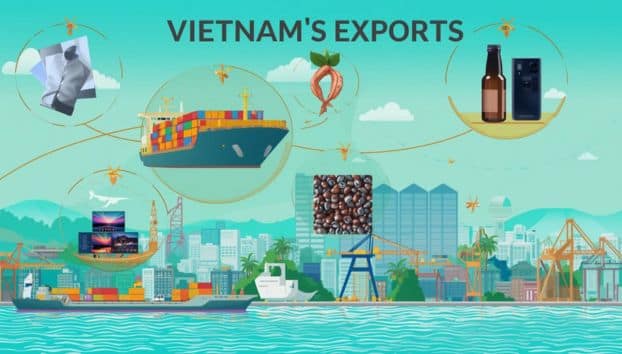
Vietnam’s major exports continue to grow due to several important factors.
3.1 Competitive Labor and Production Costs
Vietnam offers appealing labor costs and flexible production. This helps suppliers keep prices competitive.
3.2 Strong Manufacturing Ecosystem
Vietnam has many industrial zones and specialized clusters. These zones support large-scale production and reduce logistics costs.
3.3 Global Supply Chain Shifts
Many companies diversify production to reduce dependence on a single market. Vietnam benefits from this global shift. It attracts investment and builds long-term export capacity.
3.4 Government Policies Supporting Exporters
The government assists exporters through trade promotion, customs improvements, and digital transformation programs.
4. Opportunities for International Buyers and Importers
Vietnam’s major exports offer many opportunities for global businesses.
4.1 Stable and Long-Term Supply
Vietnam’s supply chain is stable. This makes it easy for buyers to maintain long-term cooperation.
4.2 Wide Variety of Products
Vietnam exports many categories. Buyers can source agriculture, electronics, machinery, garments, seafood, and more from one market.
4.3 Strong Compliance and Standards
Factories follow global standards such as HACCP, ISO, BRC, WRAP, and FSC. Buyers can trust product quality.
4.4 Attractive Pricing
Vietnam offers competitive pricing without reducing quality. This helps importers maximize profit.
5. Common Challenges in Vietnam’s Export Sector
Even though the export sector is strong, some challenges still exist.
5.1 Supply Chain Delays
Transport delays may occur during peak seasons. Buyers should plan early.
5.2 Variations in Quality
Some small factories lack international standards. Buyers should work with verified suppliers.
5.3 Communication and Documentation Issues
Language difference and documentation processes can slow negotiations. Working with a professional export brokerage service can help.
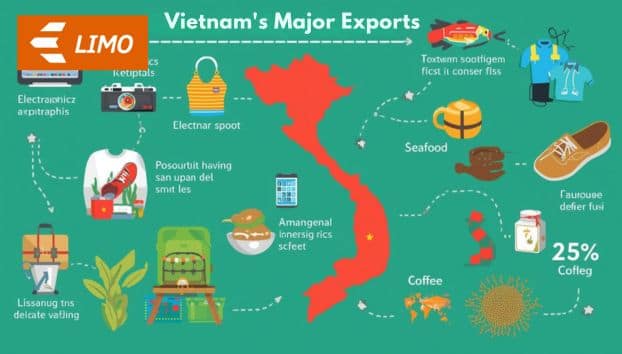
6. FAQs About Vietnam’s Major Exports
6.1 What are the largest export categories in Vietnam?
Electronics, garments, footwear, agriculture, seafood, machinery, and furniture are among the largest categories.
6.2 Why are Vietnam’s major exports growing so fast?
Vietnam benefits from FTAs, competitive manufacturing, and strong global demand.
6.3 Which markets import the most from Vietnam?
The United States, China, Japan, South Korea, and the European Union are key markets.
6.4 How can international buyers find reliable Vietnamese suppliers?
Buyers should work with a trusted export brokerage service like LimoGroup to verify suppliers and manage negotiations.
6.5 Are Vietnamese products competitive in price and quality?
Yes. Vietnam offers strong quality and cost efficiency across many export sectors
7. Conclusion
Vietnam’s major exports play an essential role in global trade. The country provides diverse product categories, strong manufacturing networks, and reliable supply chains. International buyers can benefit from Vietnam’s competitive pricing, quality production, and long-term stability. As demand continues to grow, Vietnam will remain one of the world’s top exporting countries.
If you want to connect with verified Vietnamese suppliers or find the right export partner for your business, LimoGroup can support you with professional export brokerage services. We help global buyers reach trusted manufacturers and access Vietnam’s major export industries with confidence.
Contact:
Mr. Dat – Hotline: 0973 864 960
Fanpage: Limogroup
